MIL-HDBK-61A: ECP Management Guide
< Previous | Contents | Next >
D.2 Principles and Concepts
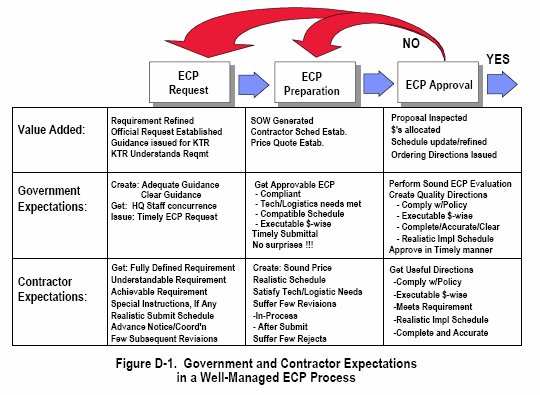
Effective communication for a task requires that each party precisely understand what the other party (or parties) expect to accomplish as an end objective. Expectations of all parties are seldom the same. Figure D-1 lists typical expectations of both the Government and Contractor for each of the three steps involved in obtaining and approving an ECP.[Details: Section 6, Figs. 6-1 through 6-4]
ECP development requires close coordination between Government and contractor processes. ECP cycle times and rework have been dramatically reduced where an Integrated Data Environment (IDE), Government/contractor Integrated Process Teams (IPTs) and Single Process Initiatives (SPI) have been employed. For maximum effectiveness, IPT meetings should be well planned, highly structured and held frequently enough to ensure exchange of useful information. Use of video teleconference (VTC) facilities or on-line review and approval through automated ECP software, vice personnel travel, are encouraged whenever possible to maximize attendance and minimize costs. Such measures can reduce both the time and costs required for ECP preparation and approval.
For correct application of this information, see NOTE on Contents page